
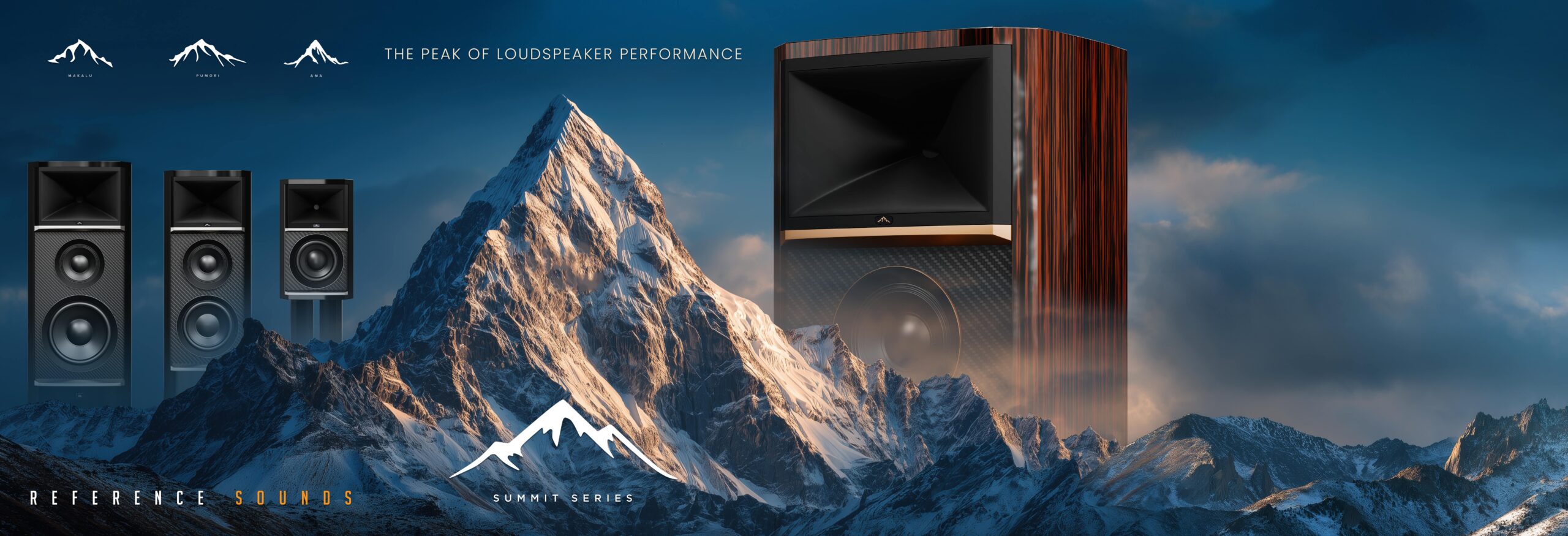
We have reached the peak…
Literally. Because what JBL has achieved with its new Summit loudspeaker series truly pushes boundaries. Formed around—currently—three models, the Summit series is perhaps JBL’s most prestigious loudspeaker concept ever. A project that has actually been in the making since 1985, with the introduction of the legendary DD55000 Everest. Then limited to a single model, now a complete family that reflects nearly 80 years of engineering in three masterful loudspeakers. Truly “the peak of loudspeaker performance.”

You Are There!
As distributor, we’re naturally enthusiastic about our products, but what this Summit series, and especially the large Makalu, has unleashed in us, also far exceeded our expectations. We dare to say it again: the performance of the Summit series is truly revolutionary and possesses qualities that even the established ultra-high-end market can’t match. A bold statement, especially since we realize that not everyone immediately associates JBL with this level of performance. Yet, that’s more a result of the much stronger marketing surrounding JBL’s lifestyle division and the limited European visibility of JBL Premium, than of JBL’s product range. Just search for “JBL DD67000 Everest Review” on Google and read what the world has to say about JBL’s penultimate top model. The Summit series isn’t some exotic creation from the brain of a loudspeaker manufacturer; it’s the accumulation of years of research, development, and belief in compression driver-horn technology. The result is perhaps the most live, realistic, and “you are there,” kick-in-the-butt loudspeaker available. Madness!
We could write an entire book about the sound and technology of these loudspeakers—we’ll secretly type the first chapter below—and we’re convinced that many reviews will echo our enthusiasm. To truly experience it, you have to feel it for yourself: and you can. The exclusive character of JBL’s Summit loudspeaker series, combined with our short- and long-term marketing plans, requires careful selected dealers, allowing us to market the Summit series through a selective, compact and strong network. If you’d like to learn more or experience the class of the Summit series for yourself, we’d love to hear from you to discuss the possibilities!
Summit Series
Anyway, you’re still here, so let’s get some enthusiasm and technical info going. We apologize for the sheer volume. At the same time, the Summit series deserves to be heard simply because the level of engineering beneath the skin of these voluminous speakers is too remarkable to conceal. Happy reading!
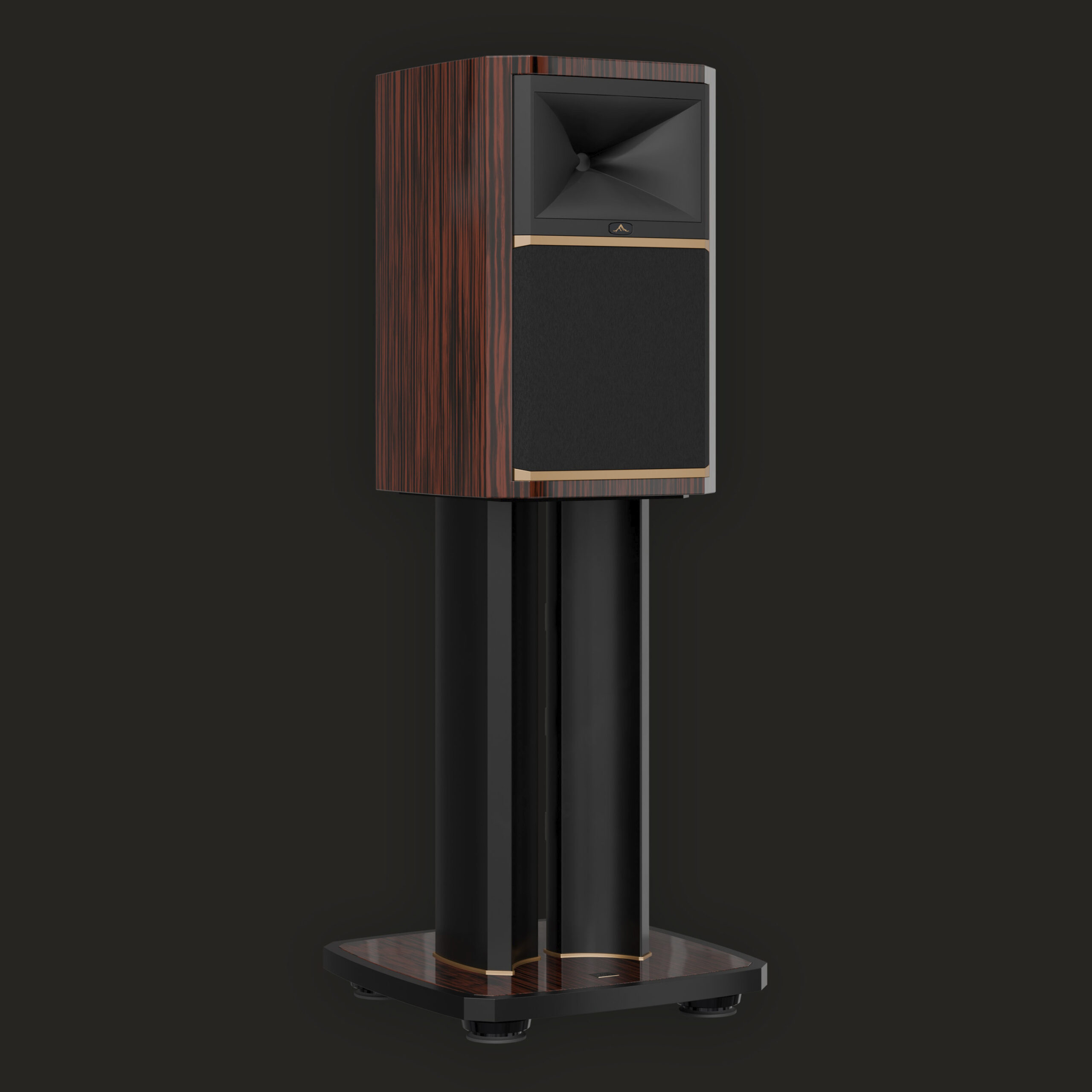
JBL Summit Series – AMA
The Summit series consists of three models. From small to large, these are the Ama, Pumori, and Makalu. Distinctive in size but sharing a common philosophy, all three models are built around completely in-house developed drivers. The unique compression driver, combined with the strikingly shaped High Definition Imaging (HDI) horn, forms the foundation and fundamental guideline for the rest of the design. This unique, extremely broadband tweeter, built on a pressure chamber design with a double diaphragm, boasts exceptionally high efficiency. Simply put, with an input signal of 1 watt, the tweeter already achieves a sound pressure level of at least 10 times higher than the predominantly used dome tweeter. Conversely, this JBL technology requires a factor of 10 less power to achieve the same sound pressure level.
The result is extremely low distortion and the ability to convert the input signal into sound with exceptional precision. The associated HDI horn naturally plays a crucial role here. It ensures a more efficient match of the acoustic impedance between the small sound source (the compression driver) and the surrounding air (horn mouth), as well as controlled dispersion. The special shape of the horn is the result of years of JBL research. The compression driver-horn combination marked the beginning of JBL and high-quality sound reproduction in general 80 years ago when James Bullow Lansing developed the first cinema loudspeaker. But like any other technical element of a loudspeaker, the technology behind the horn also has drawbacks. Inconsistent directivity, resonances along the horn, and decreasing efficiency with increasing frequencies are the three main ones. Measurement technology, finite element analysis, and insight into the relationship between room acoustics and the radiation behavior of the loudspeaker have given physical form to a new generation of JBL’s High Definition Horn configurations.
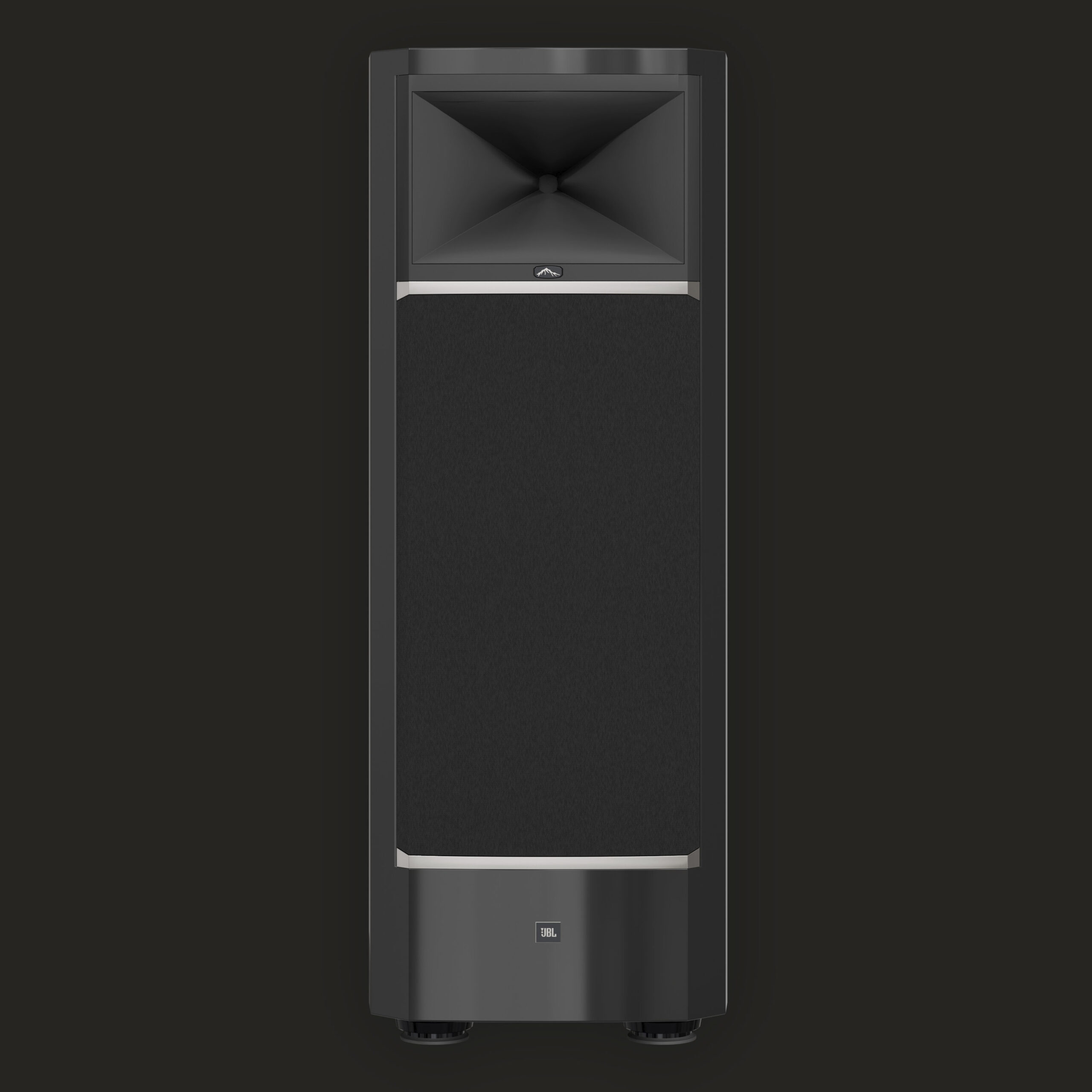
JBL Summit Series – PUMORI
The futuristic appearance is not the result of marketing or a love affair with ET, but the direct result of JBL’s research that breaks with the technical disadvantages of the traditional horn. Moreover, the HDI horn is not formed around a thin plastic, but made of a specially developed low resonance Sonoglass, which, thanks to its heavy weight and stiffness, does not add any characteristic sound but keeps the reproduction extremely neutral. A combination of compression driver and horn from JBL’s Summit series measures a hefty 25x20x20cm and weighs at least 3 kilograms. This can simply not be compared to your average tweeter, no matter how exotic. Coupled with the D2815K 1.5-inch (38mm) driver in the Ama and Pumori and the larger D2830K 3-inch (75mm) driver in the Makalu, JBL’s Summit present every detail with a sublime lightness, speed and expression reminiscent of an electrostatic system. At the same time, there is an unprecedented realism and an enormous you-are-there live feeling that we rarely experience.
The tweeter’s broadband reproduction flows seamlessly into the mid-bass and, when properly positioned, is capable of creating a three-dimensional soundscape that will even leave Google Maps clueless. These are speakers of unparalleled versatility. From delicately detailed with superior authenticity, to raw and dynamic with a tremendous kick. You choose the song, and the Summits show you their peak. Or rather, hear it. Tchaikovsky’s grand orchestral work in all its expression and lifelike tonality. Or the expansive electronic mists of Data Rebel, as if you were walking through a valley with dandelions fluttering in the wind on a warm summer evening. They itch but don’t sting, and are everywhere. In our opinion, it’s truly sensational how JBL managed to tune the Summits and how they can growl wonderfully without biting.
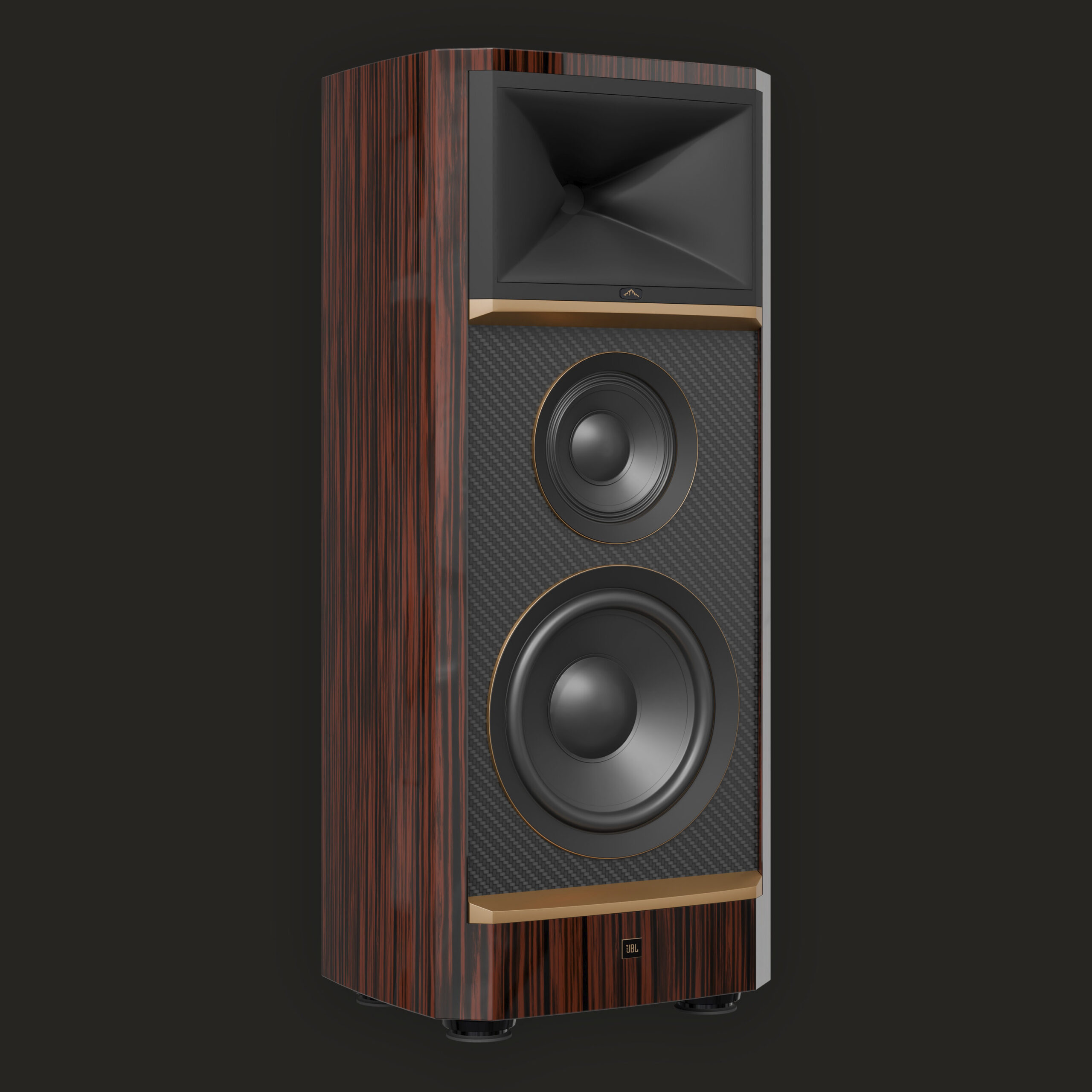
JBL Summit Series – MAKALU
From the peak to the valley
From the peak to the valley
Just like the unique construction of the tweeter, the bass driver is also a unique piece of engineering. Developed entirely in the “engineering center of excellence” located in Northridge, USA, everything in this in-house design is focused on extending the energetic and extremely fast character of the treble into the lowest octaves. Let’s hope Mr. President keeps his composure, because these drivers contain so much steel, copper, and magnets that tax anxiety can easily strike you in the gut. No, seriously, JBL’s starting point in developing the woofers—just like with the tweeter—is to minimize distortion. With a woofer, the main considerations are nonlinearities in the electromagnetic construction due to the motor structure, mechanical deformation that increases with diaphragm excursion, and deformation of the diaphragm itself. These three parameters are also linked to each other, where the change of one influences the other.
Magnet
JBL connects the woofer to the voice coil by designing a perfectly symmetrical magnet construction with high field strength. The 8″ and 10″ woofers of the Ama and Makalu utilize an oversized ferrite ring magnet, while the mighty 12″ woofer in the Makalu is built around neodymium. In all cases, the magnet construction is designed to create a high, concentrated field strength at the needed position: the air gap in which the voice coil moves. Special measures minimize the increase in voice coil inductance to prevent distortion and impedance increases with increasing frequency. The magnet’s pole core features a large, streamlined opening to allow the pressure and heat, that builds up behind the dust cap, to escape. This reduces the voice coil temperature and thus increases the thermal load.
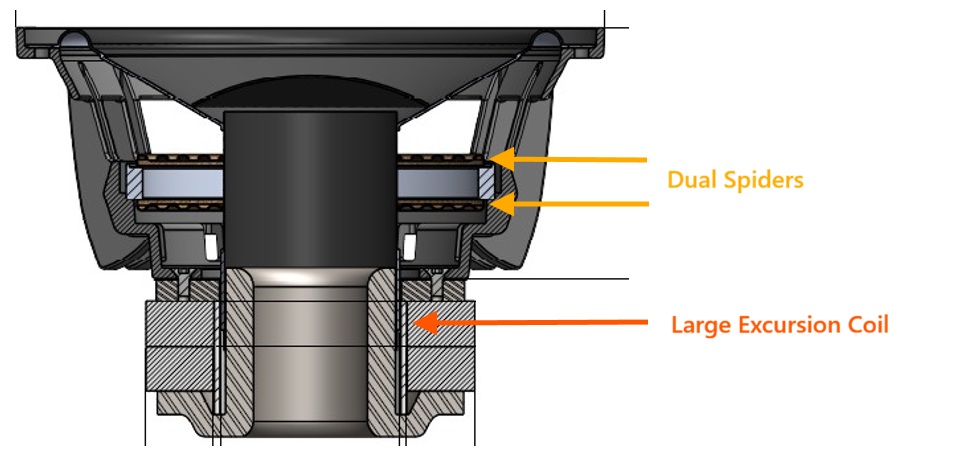
JBL Summit – Pumori 10″ Triple-layer Hybrid Carbon Cellulose Composite Cone Woofer
Voicecoil
The voice coil is pulled inward or pushed outward from the permanent magnetic field by the changing current direction in windings of the coil. The maintained control of the magnetic field over the moving voice coil is directly related to the distortion produced by the woofer. With rising volume, more current flows through the voice coil, pulling/pushing it further in and out of the magnetic field. As the volume increases, more and more of the voice coil’s windings begin to extend beyond the magnetic field, and the woofer gradually loses control of the diaphragm movement. This results in distortion. JBL controls this distortion by optimizing the magnetic field in combination with an exceptionally long voice coil. Even with extreme diaphragm movement, the coil maintains sufficient windings within the magnetic field. This ensures superbly controlled reproduction even in the most extreme passages.
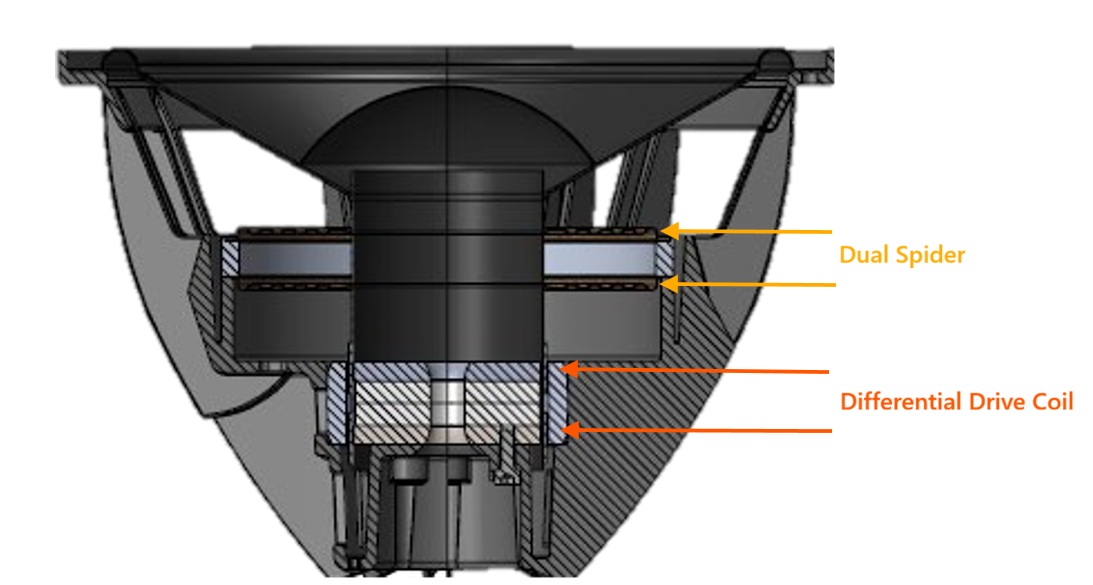
JBL Summit – Makalu 12″ Triple-layer Hybrid Carbon Cellulose Composite Cone Woofer
The 12″ woofer from the Makalu takes this even further. Here, the voice coil is designed in a dual-differential-drive configuration. This JBL invention splits the voice coil into two elements, each with its own optimized magnetic field: one at the top of the voice coil carrier and one at the bottom with opposite winding directions. This construction offers numerous advantages. The voice coil is lighter, has a lower total inductance, suffers less from heat generation, and increases the linear movement of the diaphragm. Even when the front voice coil windings leave their magnetic field during a large diaphragm deflection, the rear voice coil remains within the magnetic field. It shows that JBL truly takes every measure to ensure the diaphragm can follow the electrical music signal with exceptional precision, also at low volumes.
Cone
The cone or membrane must convert the voice coil’s movement into audible sound. Ideally, the cone is extremely stiff so it perfectly follows the drive from the center where the voice coil is bonded. At the same time, the membrane must be lightweight so the voice coil can effectively transmit its signal and be infinitely stiff. These requirements conflict with each other, meaning every woofer is a compromise to a greater or lesser extent. Too heavy means low efficiency. Stiffness means cone resonance. Too soft means cone deformation during movement. JBL didn’t take the easy way out here either, developing a completely new membrane built around a special, three-layer sandwich hybrid construction: the front and back of the cone are constructed of Carbon Cellulose Composite (C4), a proprietary formula consisting of paper pulp with added carbon fibers for extreme stiffness. Between these two layers, JBL places a closed-cell foam core to dampen cone resonance while maintaining low mass. Behind the membrane, the voice coil is centered by not one (as is usual) but two centering rings with reverse compression. This double centering ring keeps the long voice coil better centered in the magnetic field, further minimizing nonlinear movement of the cone.
Midrange
While the Ama is designed as a 2-way speaker, the larger Pumori and Makalu are 3-way speakers, with an 8″ midrange driver handling the crucial midrange. This allows the woofers in these models to optimize for the lowest frequencies, while also further refining the mid-bass reproduction because this driver optimized for smaller diaphragm excursions. The 8″ midrange driver is technically similar to the 8″ driver in the Ama, with the major difference being that the surround is not made of EPDM (rubber) but of a coated textile with an accordion edge. This construction makes the cone stiffer and less suitable for large movements. In this case this is actually an advantage because it makes it less lossy and capable of handling higher loads. Clever and extremely effective!
Crossover
All drivers are fused into a single unit via the internal crossover. JBL has chosen a design based on a large number of parallel-connected capacitors. This Multi-Cap technology reduces loss, increases accuracy, and increases power handling. The high-order crossover minimizes out-of-band distortion of the drivers by only operating them within their ideal operating range. JBL makes every effort to keep the Summit series completely distortion-free and to offer a completely neutral window on reality.
Still here?
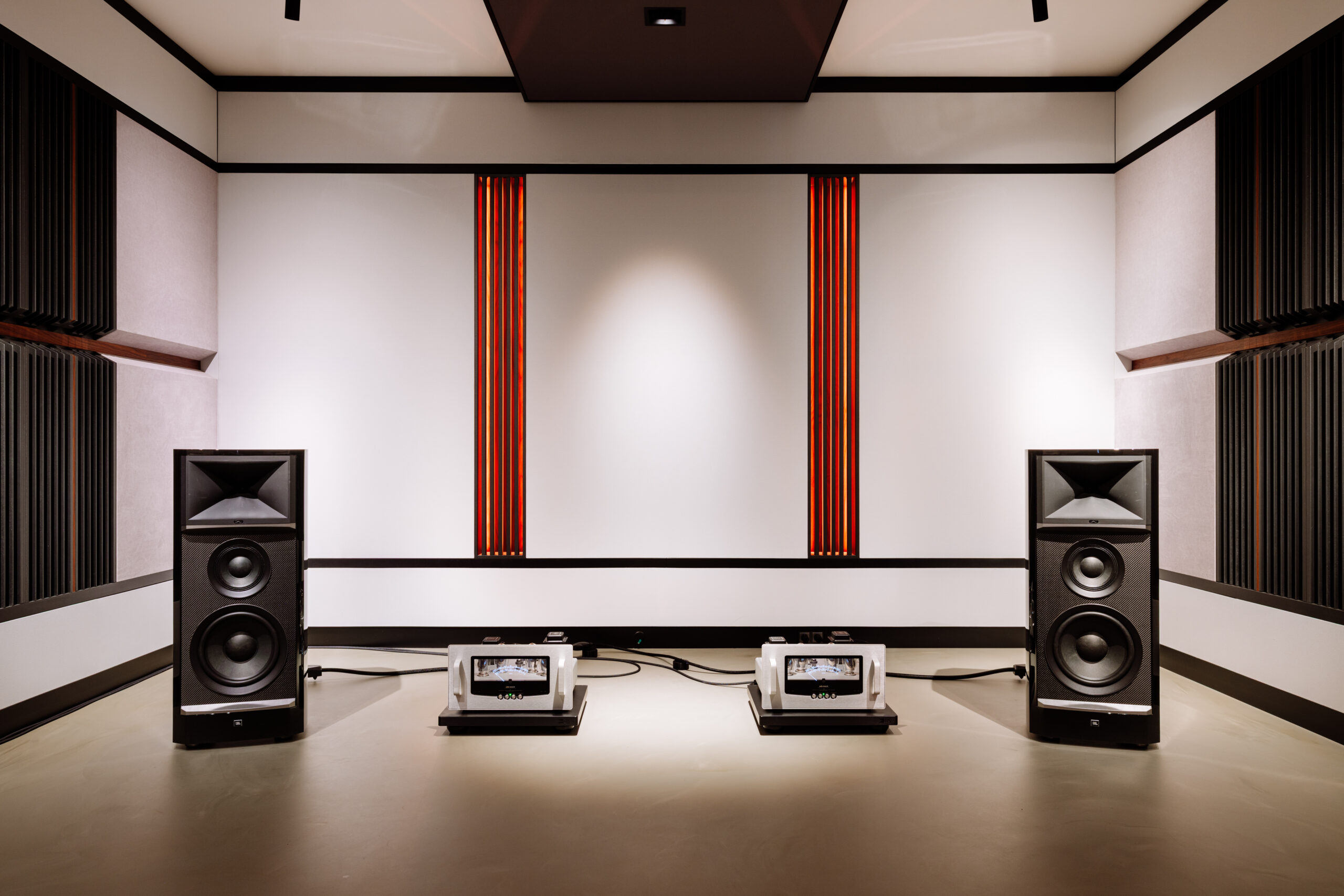
You should be! Because the result is truly spectacular. Because the large HDI horn dictates the shape of the Summit speakers, the form of the speakers cannot be described as subtle or understated. They are substantial speakers that command considerable attention. At the same time, the finish and choice of materials are of exceptional quality, and you wouldn’t be able to squeeze the entire Pink Floyd band or the entire Vienna Philharmonic Orchestra into a cookie yar. If you truly want to experience the artist live at home, you have to give them space. When properly configured, the JBL Summits perform like no other.