Mark Levinson. Every enthusiast has a story around it. Ours goes back to our years at Raf in Amsterdam, where, amidst the smoking soldering irons in the technical department, a Levinson would occasionally come in for maintenance. The appearance alone made an impression. The massive aluminum work, the heavy cooling fins, the unique logo, and an internal build quality that exuded authority – beautiful. Yet, the musical power had the greatest impact. Connected to the workbench, the Tannoy TD speakers in the test setup sounded at least three times as big. Mark Levinson marked our stepping stone to something more: a workspace in the Technical Department of then-importer Audiac, an ML No. 333 in a 15m² room in Betondorp, the motivation to continue after the end of Audiac, and our position with Reference Sounds today. The love for Mark Levinson runs deep. We are therefore more than proud to announce the next chapter from Mark Levinson that stirs the butterflies in our stomach: the new Mark Levinson No 600 series!
Our love for Mark Levinson is not unique. Few brands evoke as much emotion as Mark Levinson. Virtually every enthusiast knows the brand, has played with it, or still plays with it. Mark Levinson introduced its distinctive, uncompromising design philosophy in the 1970s and unleashed a revolution in high-quality music reproduction. The oversized power amplifiers have been copied by many but never equaled. Yet, the brand has also experienced turbulent times. In recent years, it has been relatively quiet regarding product development. In 2022, Mark Levinson celebrated its 50th anniversary with the introduction of the No 50 Mono Power amplifiers. Sensational in sound, but limited to 100 sets worldwide. After that, things remained quiet for a while. Introducing a new product isn’t that difficult; a product that is truly significantly better is. With that task in mind, a specially assembled engineering team has designed a completely new series of Mark Levinson models. A series intended to surpass both the No 500 series and the No 50s, bridging the gap between the beloved models of the 300 series and today’s modern, sleek design. That series is now seeing the light of day with the introduction of the 600 series, starting with three models in 2026 followed by expansion in 2027.
Mark Levinson No 626 Pre Amplifier
Although most of us – ourselves included – primarily associate Mark Levinson with powerful power amplifiers, the very first Mark Levinson product was a preamplifier: the LNP-1. This prototype was followed by the LNP-2 production variant aimed at the professional market. The first model developed for the high-end hi-fi market was the JC-2, named after the chief designer at the time, John Curl. The JC-2 was followed by the ML-1, a fully Class A, complementary Push-Pull configuration and the first to bear the Mark Levinson initials. Only then did the first power amplifiers follow in the form of the ML-2.
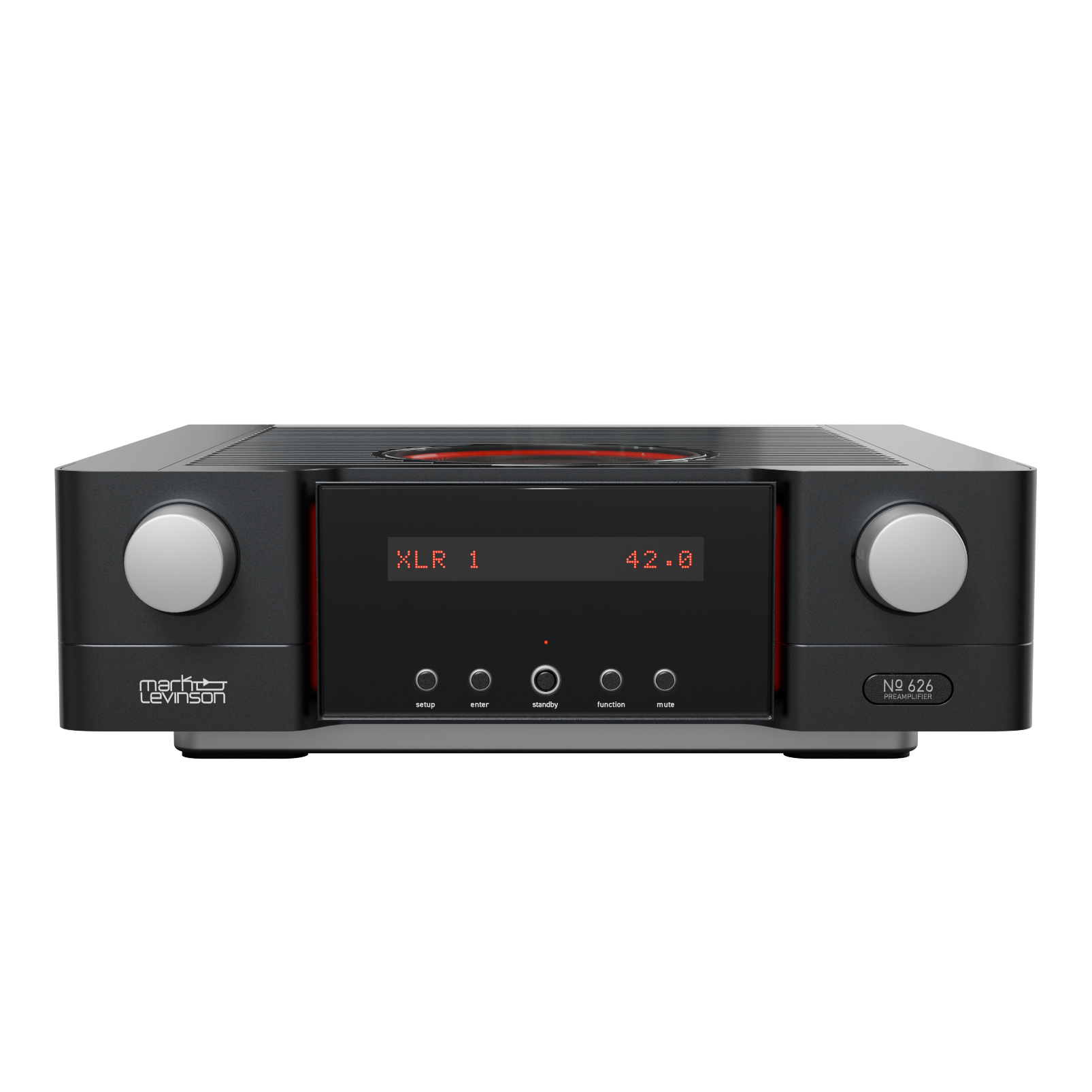
Purity and simplicity, with maximum control over every facet of signal processing, have always formed the foundation of every Mark Levinson design. The Mark Levinson No. 320 and No. 32 are still regarded by many as the very best preamplifiers ever made. Mark Levinson’s new No 626 preamplifier borrows many of these technologies, develops them further based on contemporary components, and dresses them in a beautiful tailored suit that radiates quality from every angle.
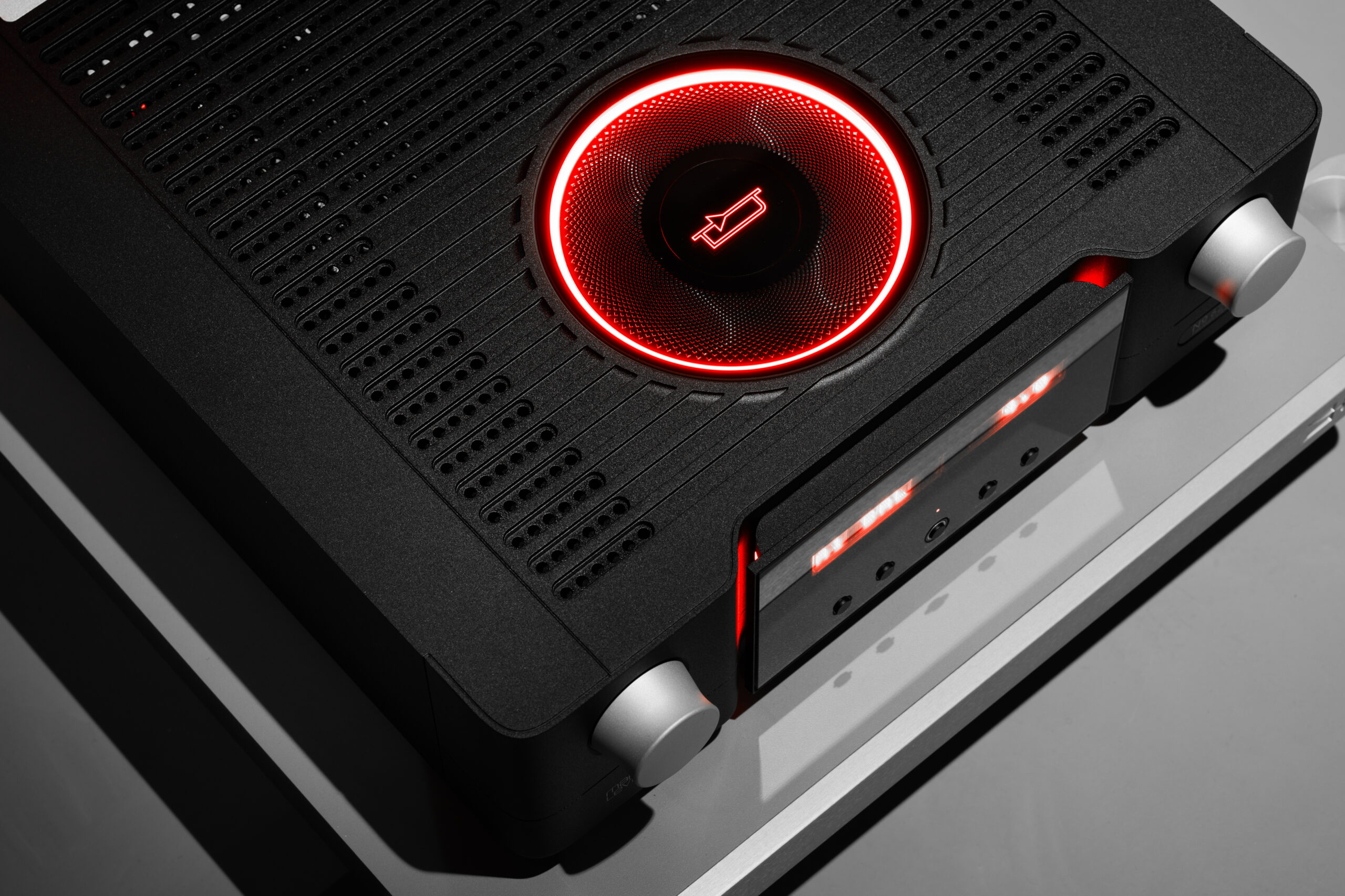
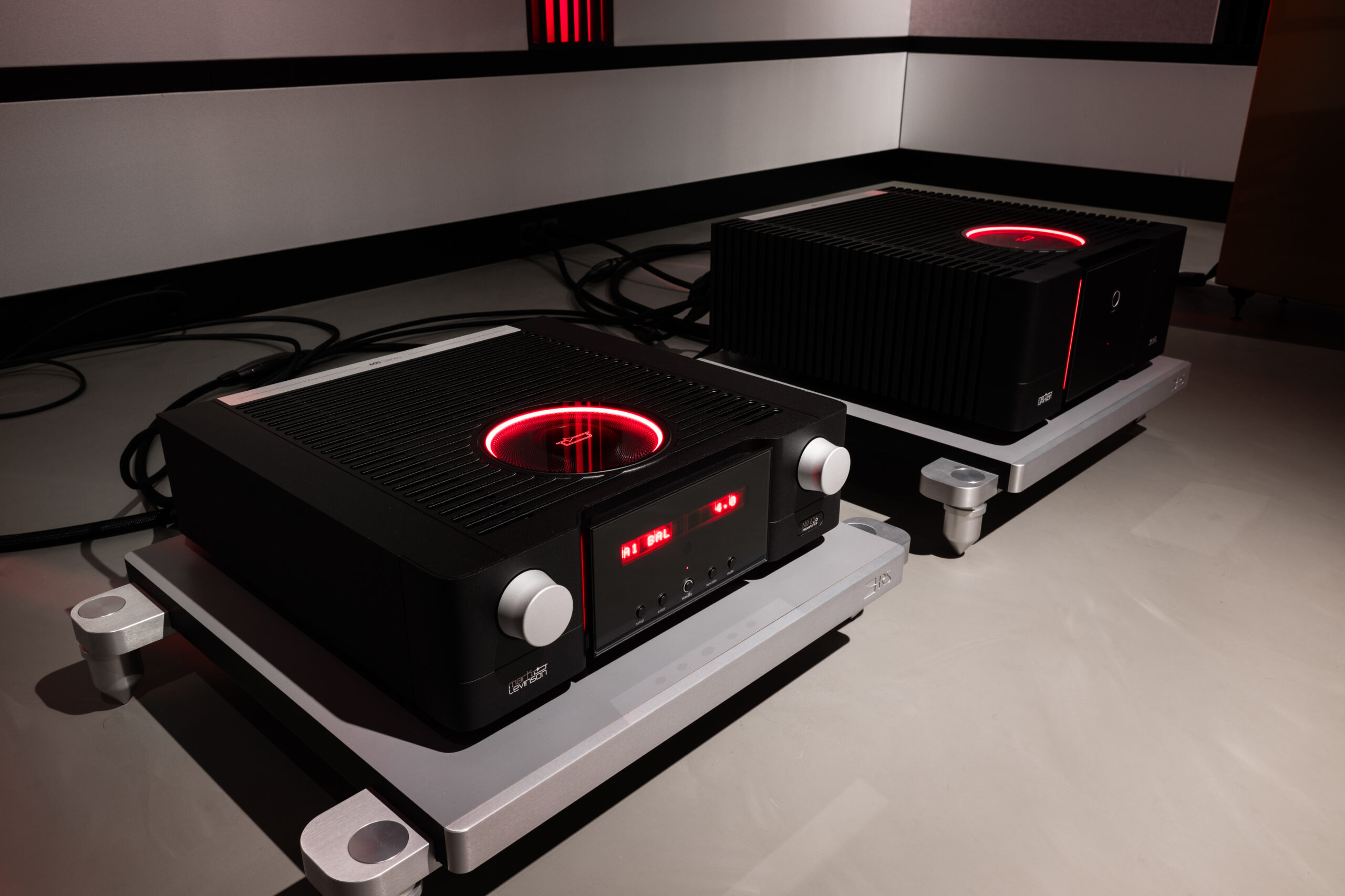
With a total depth of nearly 49 centimeters, the Mark Levinson No 626 can hardly be called modest. Beneath the beautiful cover with its unique cooling vent structure and integrated model designation illuminated by red LEDs, we find a completely balanced design in a dual-mono configuration. From the mains input, the No 626 effectively splits into two entirely separate amplifier sections that are, moreover, symmetrically constructed. The same applies to the power supply; oversized, with separate construction for digital and analog sections, and isolated to prevent interference. These are characteristic Mark Levinson priorities in which the brand has specialized since its inception. It typifies the desire to preserve every musical detail, every nuance, with maximum integrity. The No 626 thus offers a deep connection with the recording. An extremely transparent, finely tuned sound in which every facet is translated into music with utmost precision and feeling. The No 626 is equipped with two pairs of balanced (XLR) and three pairs of single-ended (RCA) inputs, as well as a single-ended input with a dedicated Class A Phono Stage (MM-MC).
In addition to the analog inputs, we also find a variety of digital inputs, including AES/EBU and asynchronous USB-C input. This newly developed Precision Link III DAC builds its circuitry around the ESS Sabre ES9039PRO 8-channel Hyperstream IV DAC in combination with discrete Mark Levinson signal processing and jitter elimination circuits. Besides the balanced and single-ended outputs for connection to the power amplifier, a Class A headphone output is present.
As befits Mark Levinson, these extensive connectivity options for turntables and digital sources are not only a functional addition but, above all, an extremely high-quality alternative to external components. Short, pure signal paths for maximum musical perfection. That is exactly what the beautiful No 626 stands for.
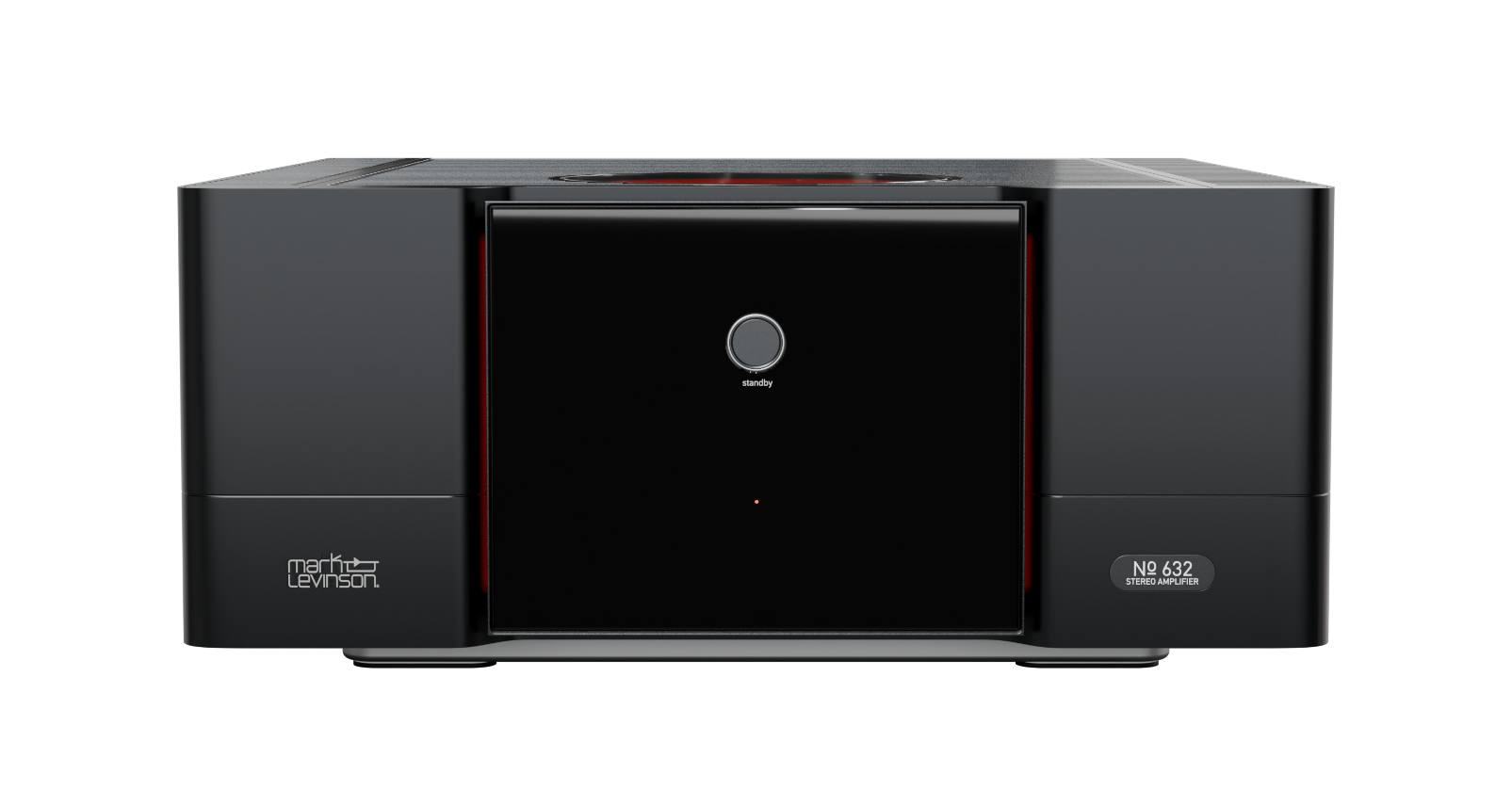
Mark Levinson No 632 Dual Mono Power Amp
The first Mark Levinson power amplifier was the ML-2. An absolute monster. Built as a single-channel mono-block, the ML-2 delivered no less than 25 true Watts in full Class A. Yet it was primarily its unprecedented load stability combined with fine control that elevated it to legendary status. That extreme current reserve made the ML-2 an ideal partner for the Apogee loudspeakers of the time, whose 0.3 Ohm impedance turned many an amplifier into a smoke machine.
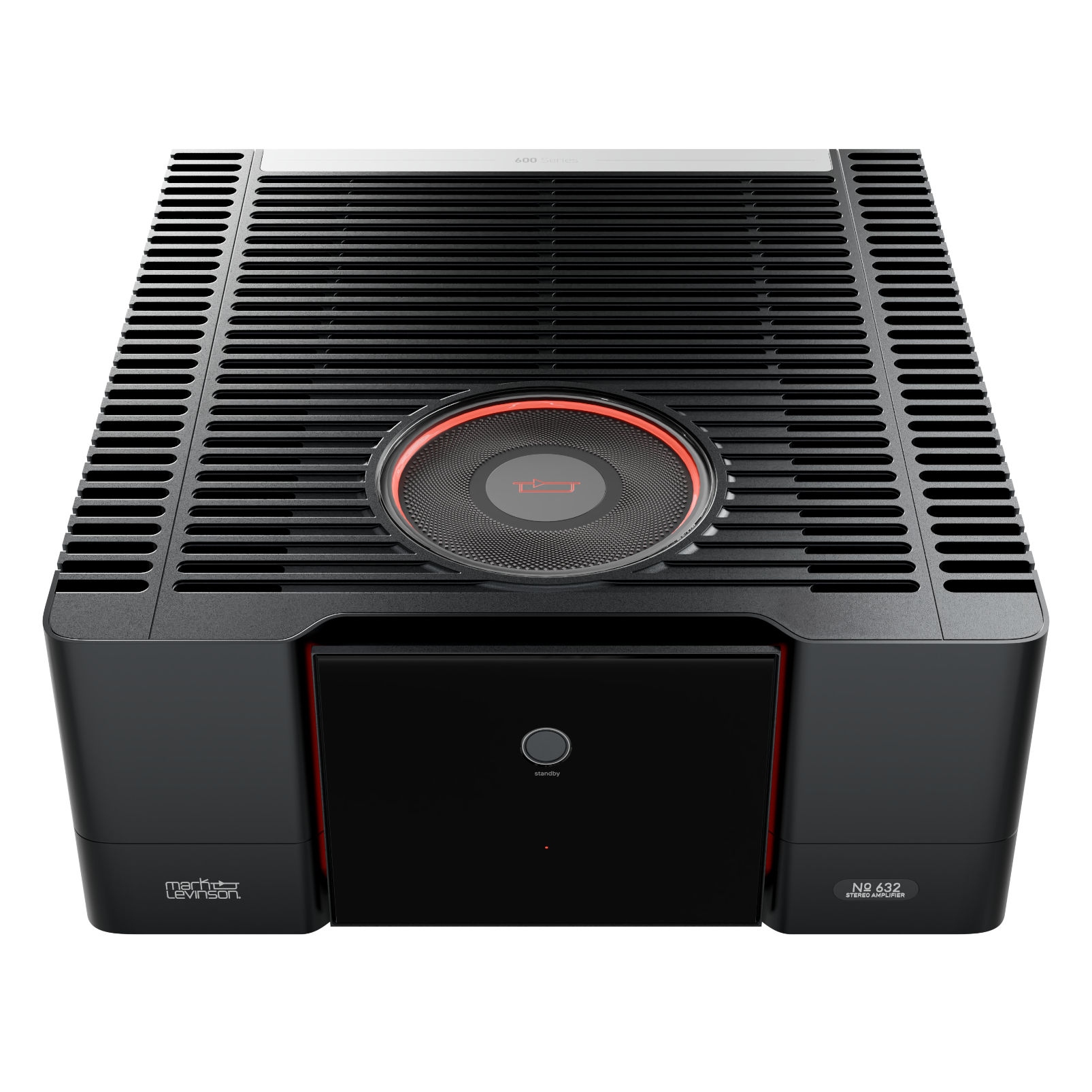
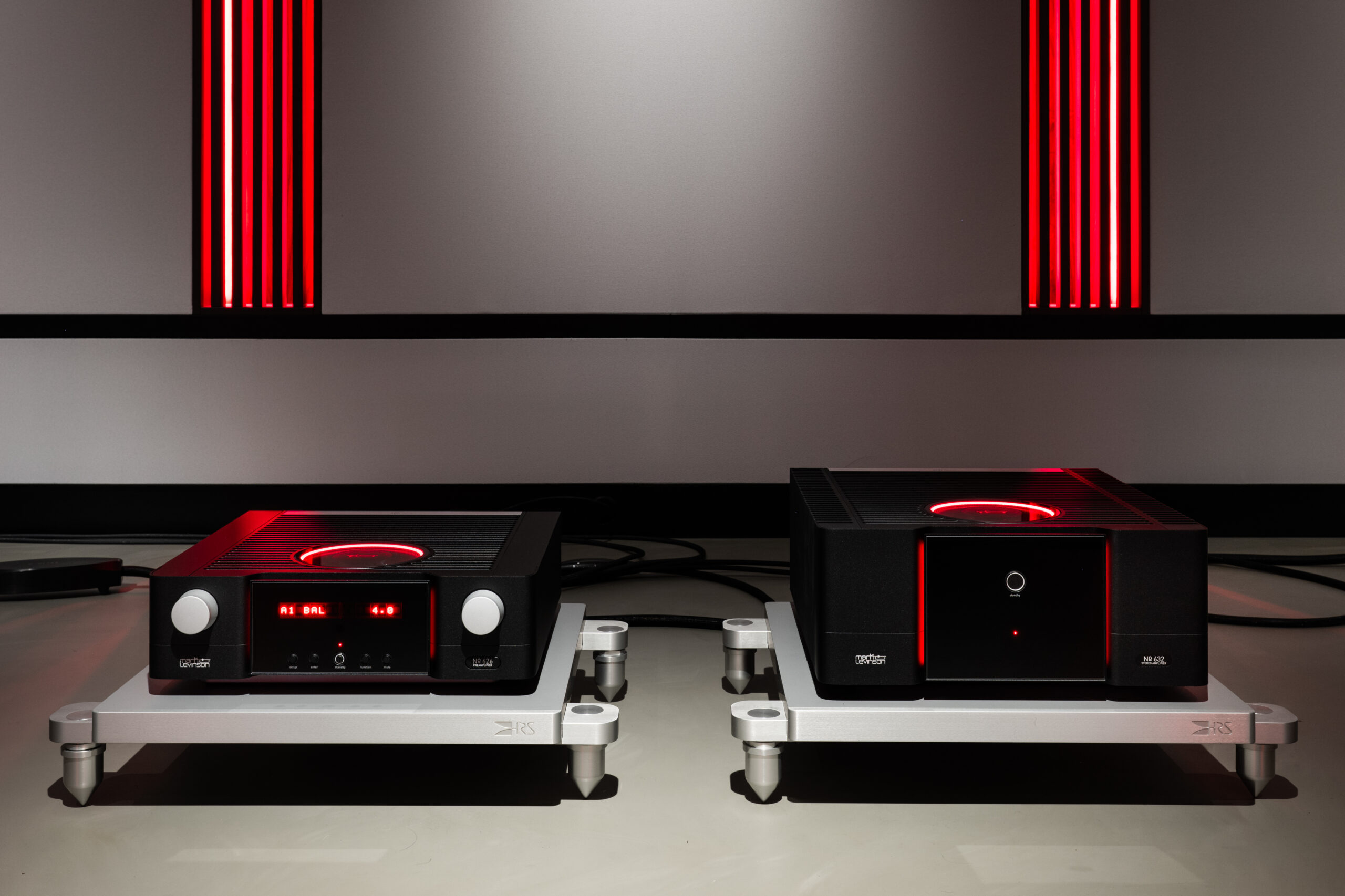
Just as the ML-2 was paired with the ML-1, the current No 632 forms the natural combination with the No 626. Conceptually, however, the No 632 is more reminiscent of the No 300 series power amplifiers. The visible heat sinks, which transition beautifully into the round curves on the front, remind us of the No 336, while the stylish glass front plate has been adopted from the No 53s. The top features the same circular inlay as found on the No 626 with red LED accents that symbolize the internal ‘engine’ of the No 632.
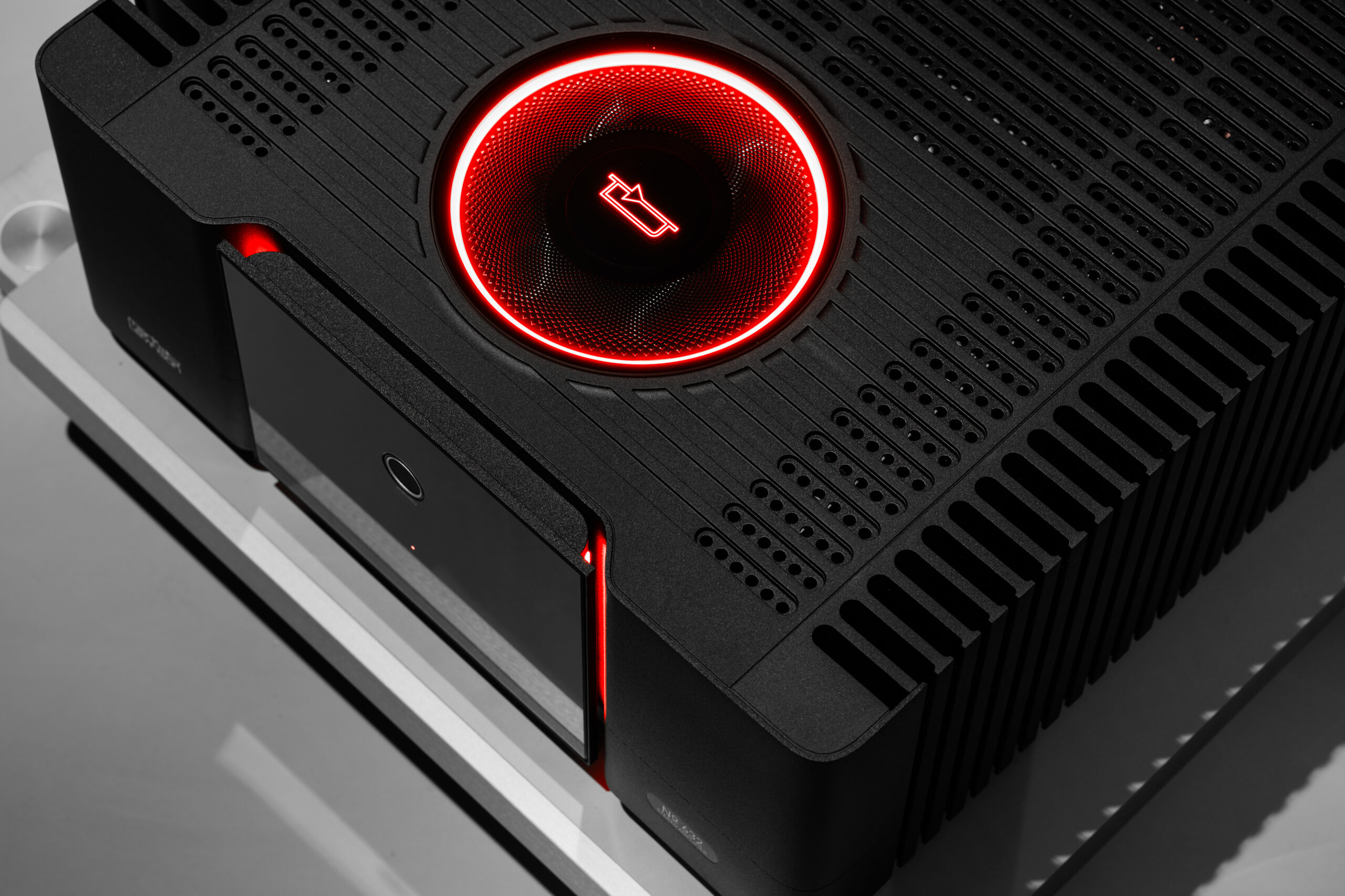
Like the preamplifier, the No 632 is fully balanced and dual-mono in design. The 1900VA low-noise toroidal transformer developed for Mark Levinson is centrally located and both mechanically and electromagnetically isolated. This forms the basis for a superior supply voltage with enormous headroom – undoubtedly the most important component for musical control. The rectification and buffering are typically of a rare class as Mark Levinson leaves nothing to chance with 80,000uF buffer capacity. With the No 632, Mark Levinson opts for minimal internal feedback and a particularly high bias setting for its 12 high-bandwidth bipolar output transistors per channel. This makes the No 632 super linear and ultra stable with maximum grip on the loudspeaker, regardless of impedance. Proven by the power output figures delivering 250W per channel at 8Ω, 20Hz to 20kHz, at <0.3% THD, doubling down into a 4Ω load and full 2Ω stability. Together with the No 626, the No 632 presents music with extreme refinement and control. The sound is truly unprecedentedly clean but not without soul. On the contrary, the 600 series possesses the control and effortlessness that characterized the 300 series of that era, but adds phenomenal transparency and energetic speed. The combination draws you deep into the music, where every detail is presented clearly, lifelike, and with high contrast. Once broken in, this combination represents exactly what Mark Levinson is all about: Power. Precision. Purity.
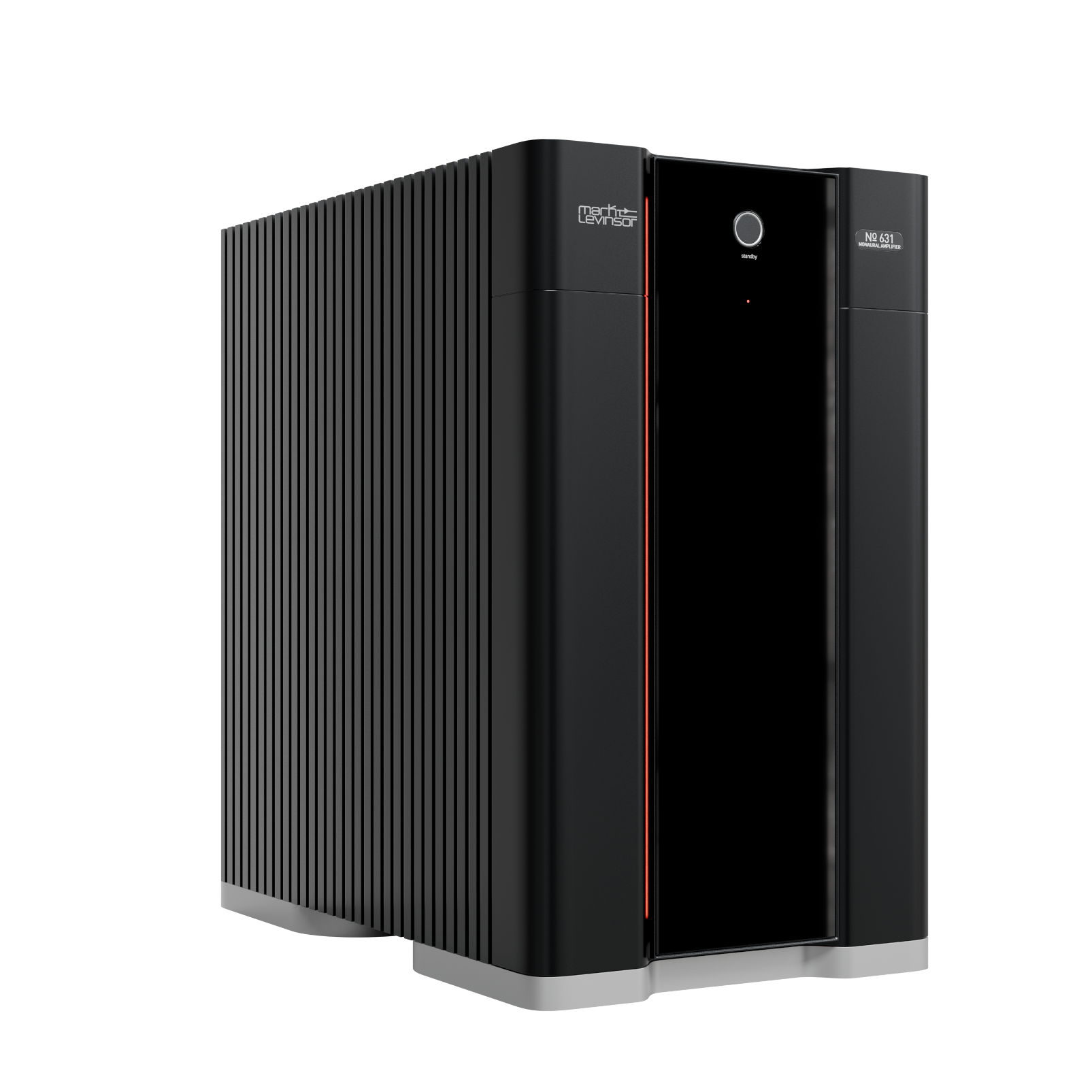
Later this year, we expect to expand the 600 series with the No 631 mono power amplifiers inspired by the iconic No 33H. Yes indeed, a 60 kilos+, vertical oriented powerhouse – for which we will happily write a new introduction by then!
With this, Mark Levinson’s new 600 series makes it crystal clear that true legends do not fade. They simply evolve.